Background
Nine models the Konflikt-Simulator leans on — one page each: what the model says, where it comes from, how well it is backed, what you can do with it before the conversation, where the site uses it and where it misleads.
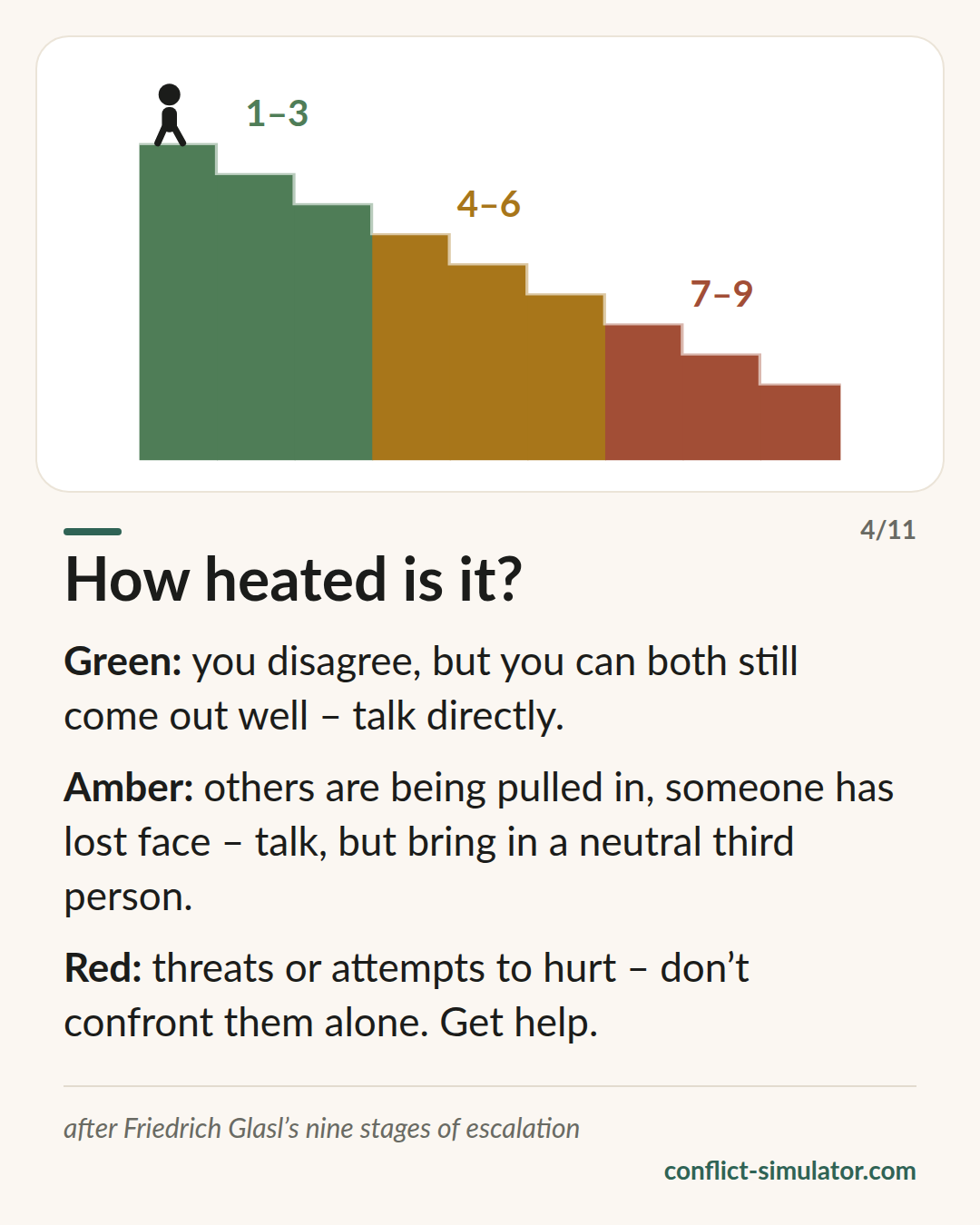 Glasl's stages of escalation Nine stages, three phases — and the question whether you should still have this conversation on your own. Practice wisdom, widely used, not validated
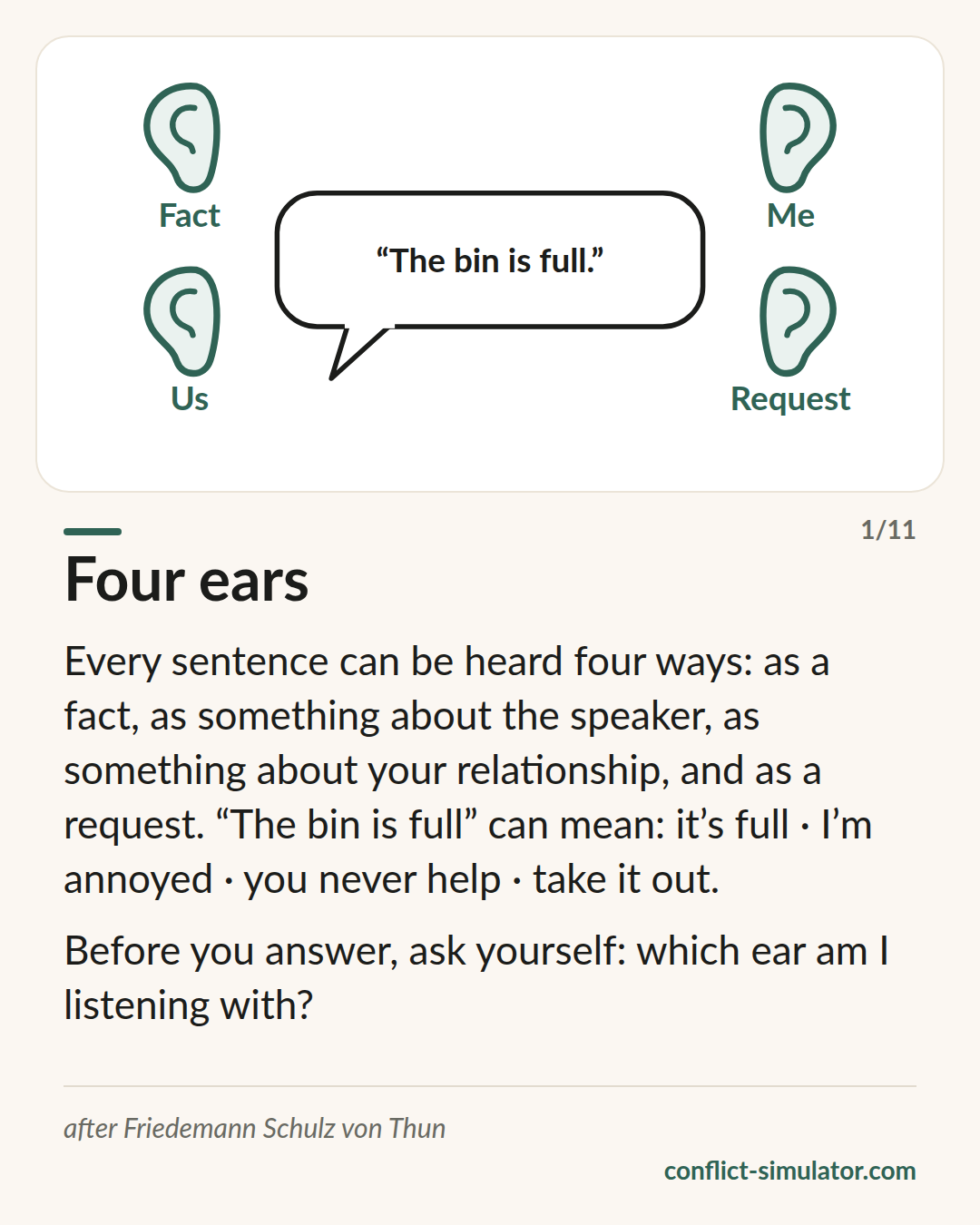 Four ears Every message has four sides, and the person listening often hears a different one than you meant. Practice wisdom, didactically strong, barely tested
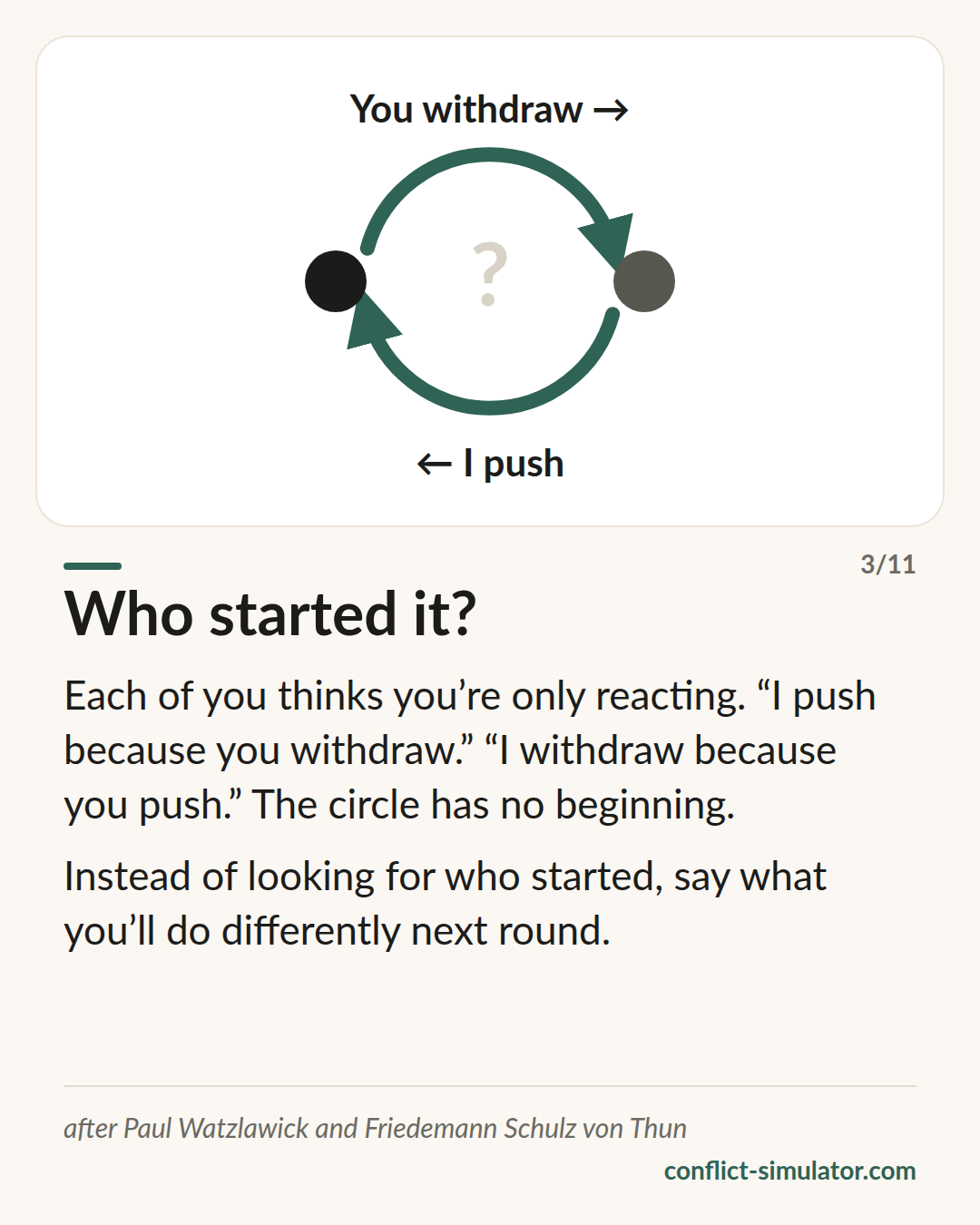 Watzlawick's axioms One cannot not communicate — and three more sentences that explain a row before it begins. Practice wisdom, influential, hard to test
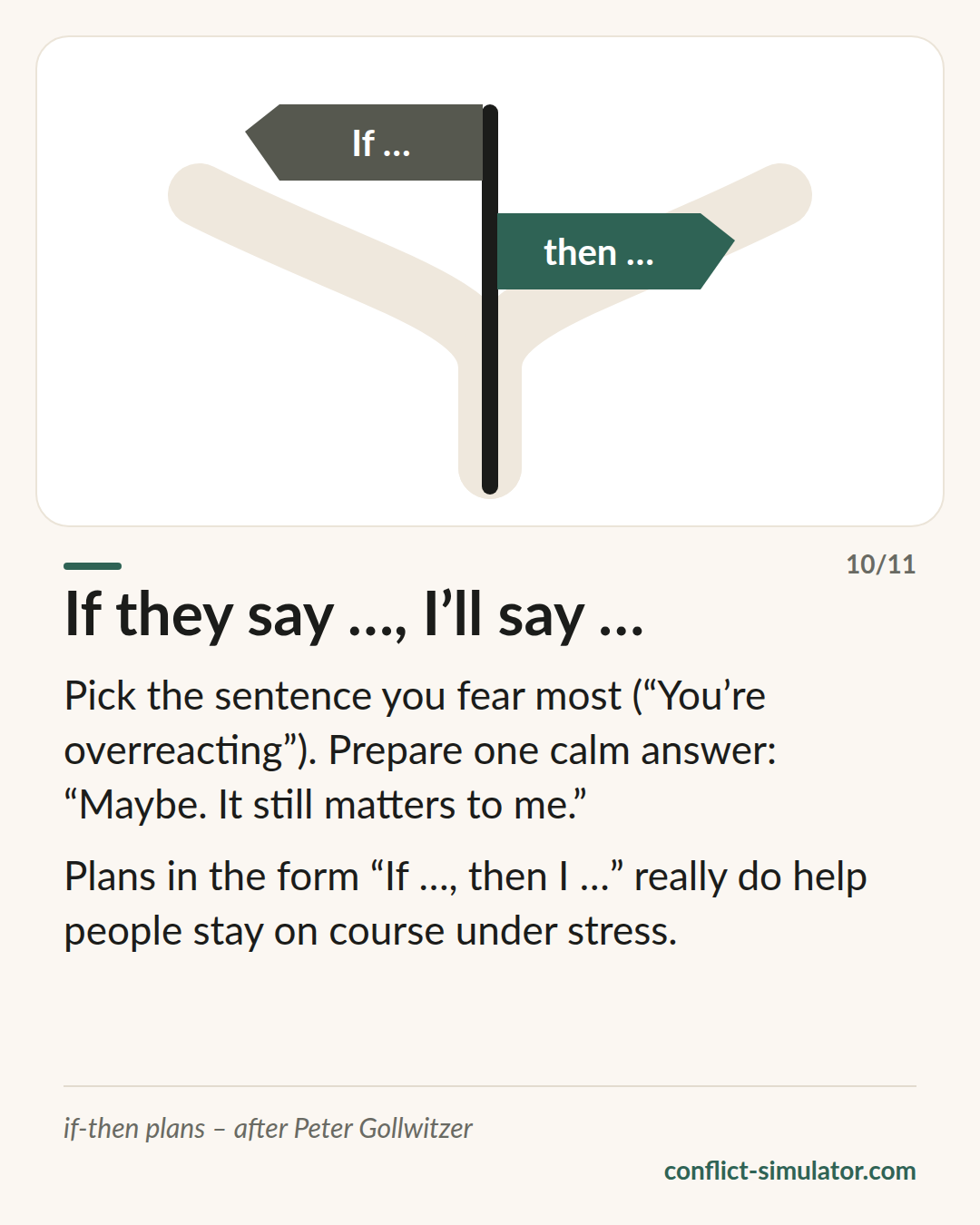 If-then plans One prepared sentence for the moment you fear most — the best-supported tool on this site. Well supported — meta-analysis of 94 studies
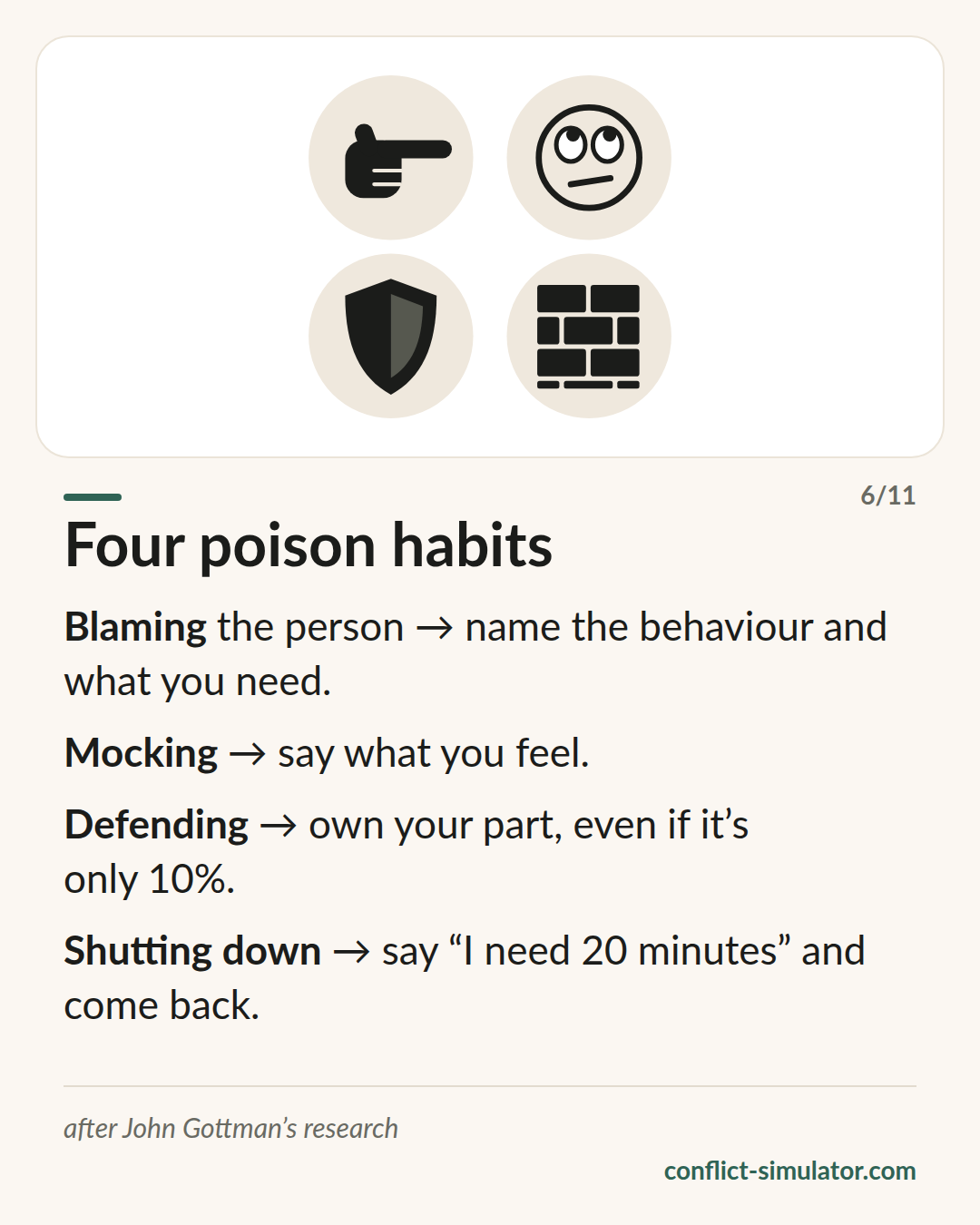 Four poison habits Four patterns that reliably tip a conversation over — and an antidote for each. Patterns well supported, prediction rates not, antidotes practice wisdom
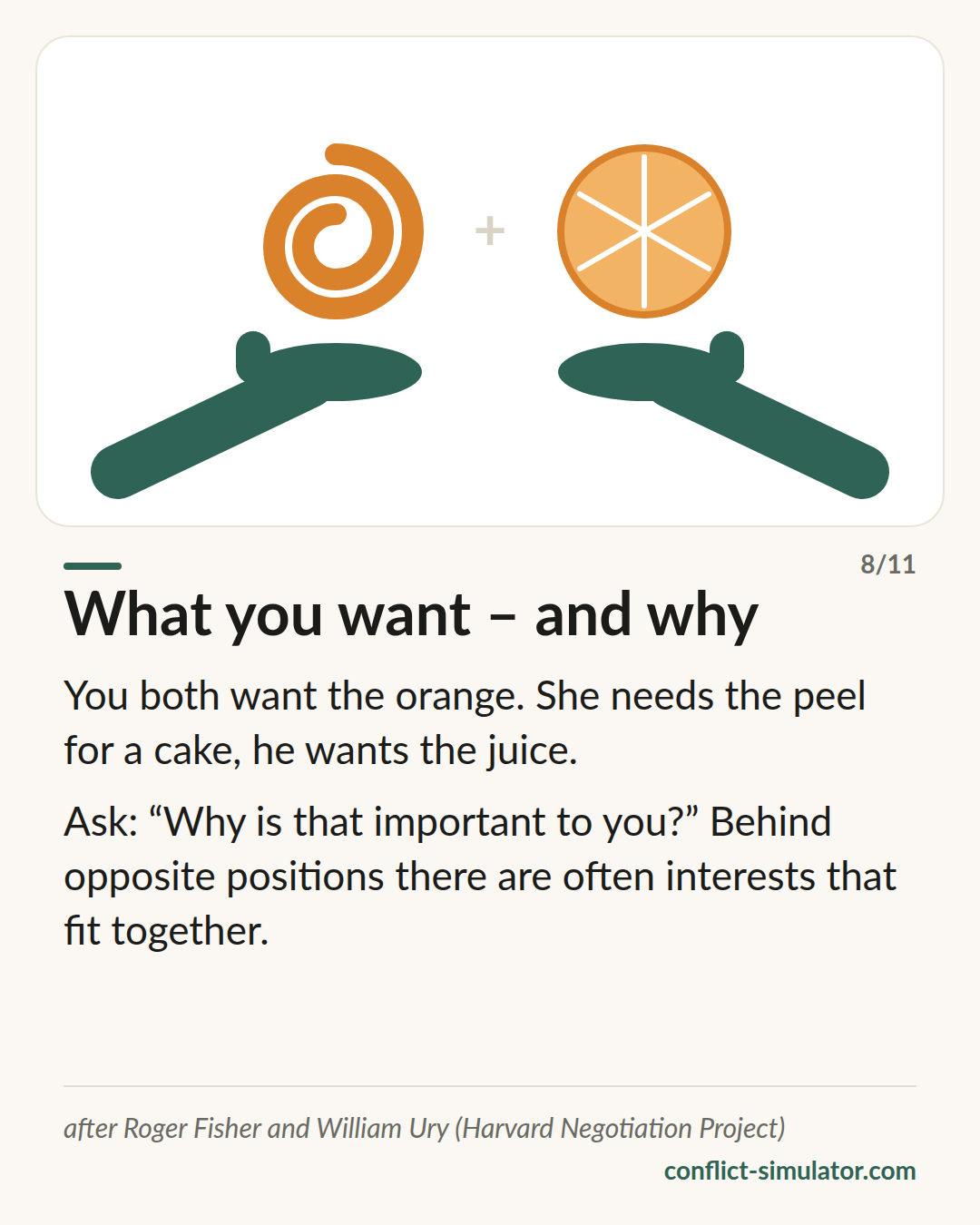 Interests, not positions Behind what someone demands there is a reason — and two reasons often fit together better than two demands. Core well supported, the package practice wisdom
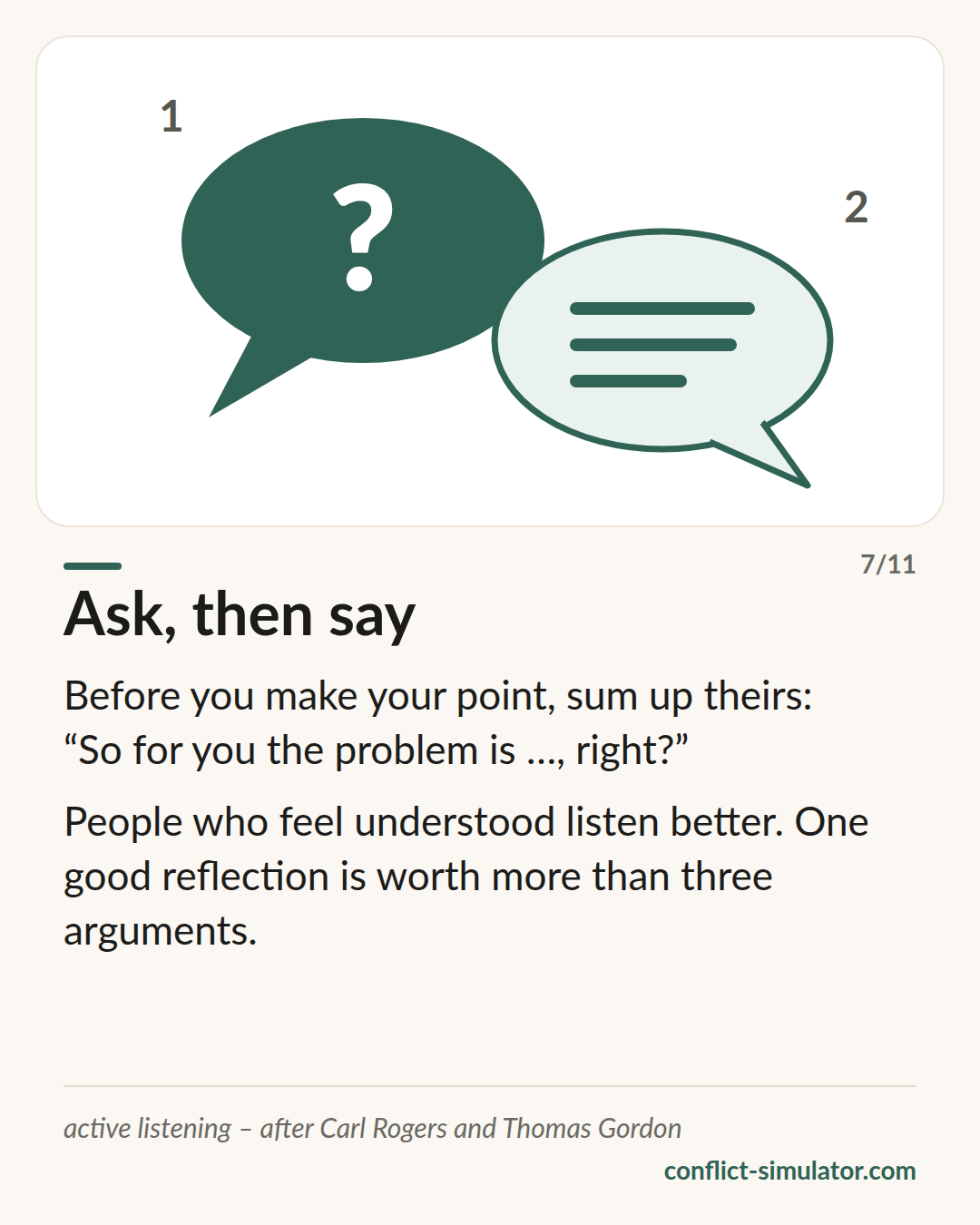 I-messages “You make me angry” asserts a cause. “I get angry” describes what happens — and cannot be denied. Partly supported — the form helps but does not replace the stance
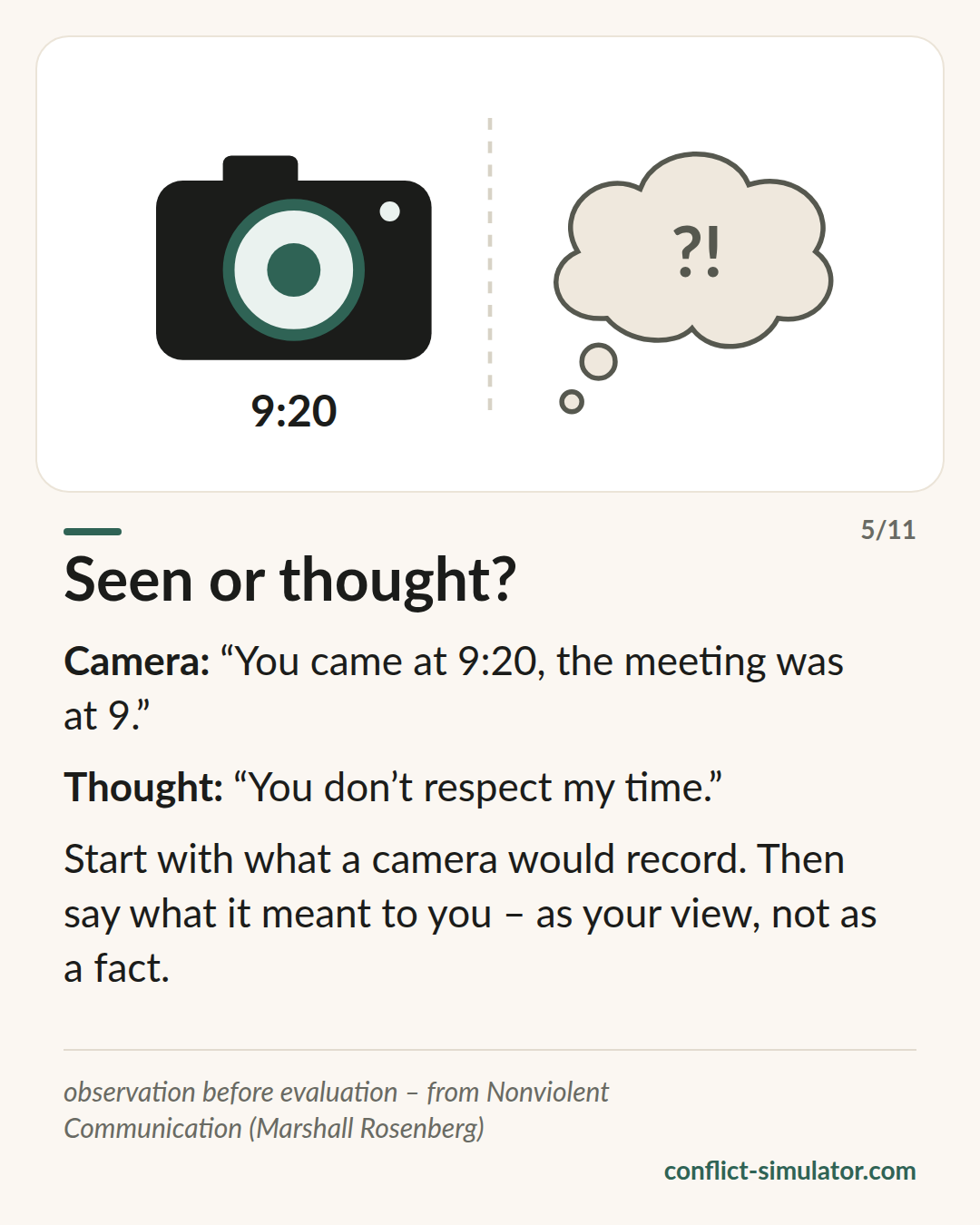 Observe, do not evaluate A label invites a counter-example. What a camera would have recorded cannot be argued away. Partly supported, core consistent with feedback research
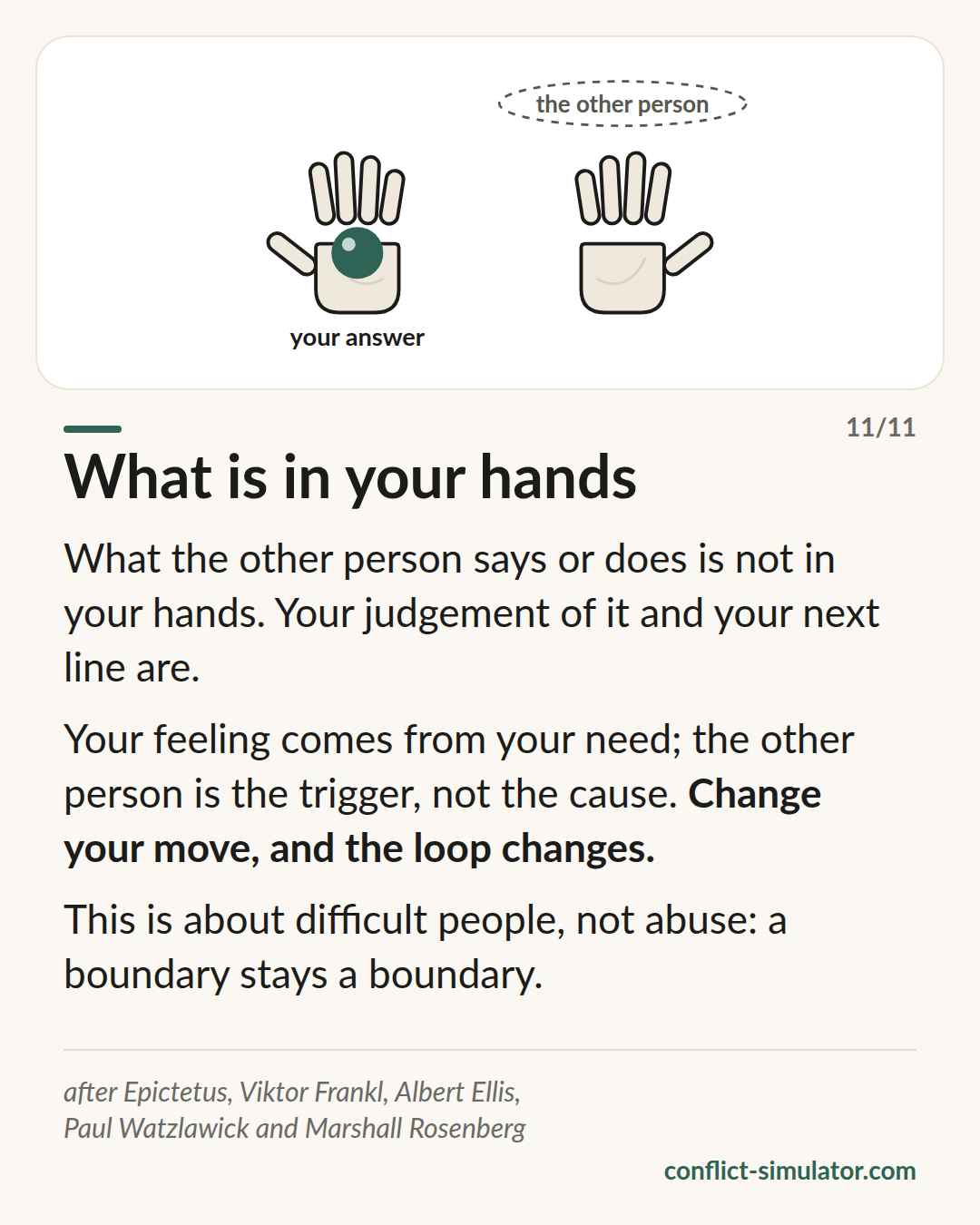 What is in your hands What the other person says is not in your hands. Your judgement and your next line are — and with them the loop you are both in. Reappraisal well supported, the rest practice wisdom
The evidence is named honestly: “well supported” means experiments and meta-analyses, “practice wisdom” means proven in use but barely tested.